




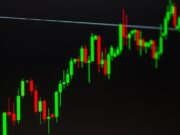
Gold just crossed $4,500 an ounce.
Let that sink in for a moment.
Twelve months ago, if you had told the average financial advisor that gold would post its best annual performance since 1979 — up 64.5% in a single year — he would have walked you to the nearest exit. Today, that number is sitting in the World Gold Council’s official data.
And the bull market isn’t cooling off. Central banks bought 863 tonnes of gold in 2025 alone. JPMorgan is forecasting 585 tonnes per quarter in 2026. Global gold demand hit an all-time record in Q1 2026. The institutions that print money for a living are loading up on the one asset they can’t print.
Meanwhile, the investment world is chasing the same five names: Barrick, Newmont, Agnico Eagle. Everyone piling into the same crowded boats, bidding prices up, squeezing the upside out.
I’ve been doing this long enough to know that the real money in any bull market isn’t made by buying the obvious trade.
It’s made by finding what everyone else missed.
And right now, hidden in the regulatory wilderness of Southwest Alaska, there is a deposit of gold so enormous — so mathematically disconnected from its current stock price — that I’ve spent the last several months trying to find the flaw in the thesis.
I haven’t found one.
The company is called Northern Dynasty Minerals Ltd. It trades on the AMEX under the ticker NAK. And as I write this, you can buy shares for approximately $1.92.
What I’m about to show you may be the most asymmetric setup in the gold market today.
Part One: The Gold Supply Crisis Nobody Is Talking About
Here’s the part of the gold story that the financial press keeps glossing over.
Everyone understands that demand is surging. Central banks, retail investors, ETF inflows — the buy side of this market is well-documented and well-understood. But the supply side is a slow-motion catastrophe that most people aren’t pricing in.
No major new gold discoveries have been made in years.
This isn’t conjecture. The mining industry has been living off discoveries made decades ago. The great ore bodies that feed today’s production — Carlin, Goldstrike, Super Pit in Australia — were found in the 1960s, 70s, and 80s. Finding a genuinely world-class deposit now takes 10 to 20 years from discovery to production, assuming you can get it permitted at all.
And the ore grades are declining. The gold that was easy to find has been found. What’s left requires moving more rock to get the same ounces out of the ground.
Meanwhile, the buyers keep buying.
When supply is structurally constrained and demand is accelerating, you don’t need a crystal ball. You need a calculator.
The economics are pointing toward something extraordinary for producers — and potentially historic for anyone sitting on undeveloped resources that were previously considered uneconomic.
At $4,500 gold, deposits that made no sense at $1,200 or even $2,000 are suddenly worth developing. Projects that were shelved, stalled, or stuck in regulatory purgatory are being revisited.
That’s the macro setup. Now let me tell you about the specific situation I’ve been watching.
Part Two: The Biggest Gold Deposit in America
Southwest Alaska. A remote stretch of wilderness approximately 274 square miles in size.
Underneath it sits what Northern Dynasty Minerals calls the Pebble deposit — their resource estimate puts it at 161 million ounces of gold equivalent. That number includes gold, copper, and molybdenum, but let’s just focus on the gold for now.
At today’s gold price of $4,500 per ounce, the gold portion alone is worth approximately $725 billion in the ground.
Let me put that in terms that make sense.
The Associated Press has called Pebble “the most significant deposit of its kind in the world.”
The New York Times called it “one of the richest deposits in the world.”
These aren’t promotional claims from a company press release. These are descriptions from the most skeptical journalistic institutions in America.
And yet most investors have never heard of it.
Why? Because for over 20 years, this deposit has been locked in one of the most complicated regulatory battles in American history. Environmental groups, the EPA, the Army Corps of Engineers, state politics, tribal opposition — the Pebble Mine has fought all of it, and in 2023, the Biden administration’s EPA vetoed the project under the Clean Water Act.
The world moved on. The analysts moved on. The financial press moved on.
Northern Dynasty did not.
Part Three: Washington Has Left Its Fingerprints All Over This Story
This is the part that convinced me this situation is different from previous attempts.
I want to share three facts with you. You can look all of these up. They are not speculative.
Fact one: Howard Lutnick — now the sitting U.S. Commerce Secretary under the Trump administration — was Chairman and CEO of Cantor Fitzgerald when his firm served as lead underwriter for Northern Dynasty’s public offering in 2019. Cantor Fitzgerald Canada managed a $15.5 million underwritten offering for Northern Dynasty. Lutnick personally oversaw that firm.
Fact two: Susie Wiles, the current White House Chief of Staff, was a former lobbyist for the Pebble Mine deposit. Not a casual connection. A professional one. She was paid to push this project forward.
The two people sitting closest to the President of the United States — his chief of staff and his commerce secretary — both have direct, documented history with this mine.
Fact three: President Trump signed Executive Order 14153, titled “Unleashing Alaska’s Extraordinary Resource Potential.” Northern Dynasty has publicly stated that this executive order cleared a significant remaining regulatory hurdle for the project.
The Alaska Governor has also personally pushed for this mine in direct communications with the White House.
Now consider the regulatory timeline. Northern Dynasty filed summary judgment briefs in October 2025 arguing that the Biden EPA’s veto is “illegal.” The Alaska Beacon reported in July 2025 that the Trump administration had “hinted at a lifeline” for the project. The Army Corps’ original permit denial was made “without prejudice” — meaning it can be reconsidered if the EPA veto is removed.
A court decision on the EPA challenges is expected by end of 2026. Settlement discussions between Northern Dynasty and the government are reportedly ongoing.
I am not predicting the outcome. I am observing the alignment.
When the Commerce Secretary and the White House Chief of Staff have documented financial and professional ties to a specific project — and the sitting President has signed executive orders aimed at unlocking that category of resources — the probability of a favorable outcome increases materially.
Part Four: The Valuation Disconnect Is Staggering
Here is the comparison that stopped me cold when I first ran the numbers.
Barrick Mining Corporation — one of the largest gold producers on earth, ticker symbol B — holds 89 million ounces of proven and probable gold reserves as of December 31, 2024. Its market cap in April 2026 is approximately $68 billion.
Simple math: the market values Barrick’s gold reserves at roughly $764 per ounce in the ground.
Now look at Northern Dynasty.
The Pebble deposit contains an estimated 161 million ounces of gold equivalent — nearly twice Barrick’s total reserves.
Northern Dynasty’s market cap as I write this: approximately $985 million. Under $1 billion.
That values NAK’s gold at roughly $6 per ounce in the ground.
Barrick: $764 per ounce. NAK: $6 per ounce.
Now, I understand that undeveloped resources aren’t worth the same as proven reserves at a producing mine. I understand the regulatory discount. I’ve built that into my thinking.
But we’re talking about a 127-to-1 valuation gap between a producing miner and a deposit that is nearly twice its size. Even if you apply a 90% discount for regulatory risk, the math is deeply, structurally compelling.
Here’s another data point that tells you something about the attention this company receives.
According to research from financial analyst Jim Rickards: only one analyst in the world currently covers NAK. For context, Newmont — one of NAK’s peers in the gold space — has fifteen analysts covering it.
One analyst. For the largest undeveloped gold deposit in the world.
This is what Wall Street looks like when it has collectively given up on something. And that collective giving up is precisely what creates opportunity for the investors who haven’t.
Part Five: The Smart Money Has Not Given Up
When I look at who else is paying attention to Northern Dynasty, I find names that don’t typically throw money at long shots for fun.
According to research from financial analyst Jim Rickards: company insiders have placed approximately $68 million of their own capital on Northern Dynasty. These are people with full access to the internal data — the actual resource estimates, the legal strategy, the regulatory conversations. They are betting their own money.
Also per Rickards’ analysis: institutional investors including Citadel, Jane Street, and Millennium Management have taken positions in NAK.
These are not sentiment investors. These are not retail gamblers. Citadel, Jane Street, and Millennium run some of the most sophisticated analytical operations on Wall Street. When they build a position, they’ve done the work.
None of this is a guarantee. But when insiders are betting $68 million of their own money and quant shops are building positions — while the rest of Wall Street has one analyst covering the stock — that’s a signal worth paying attention to.
Part Six: What Could Go Wrong (And I’m Not Going to Pretend Otherwise)
I’ve given you the bull case. Now let me give you the honest version.
This is a speculative investment. Full stop.
The EPA veto is still in court. The summary judgment process could take longer than expected. Courts have surprised investors before, and they will again.
Settlement discussions between Northern Dynasty and the U.S. government are ongoing, but “ongoing” is not the same as “concluded favorably.” Settlement talks can drag on for years, or collapse entirely.
This project has been “about to happen” before. I’ve seen the cycle — regulatory optimism builds, something goes wrong, the stock crashes, the cycle starts again. Northern Dynasty has been fighting this battle for over two decades. That history should not be ignored.
Environmental opposition remains organized and well-funded. The ecological concerns around the mine — its proximity to the Bristol Bay watershed and one of the world’s most productive salmon fisheries — are real, and they will generate continued legal and political friction regardless of the federal administration’s posture.
I am convinced the political alignment is real. I am convinced the valuation disconnect is real. I am not convinced the regulatory path is clear, and neither should you be.
This is a position-sizing story. If you decide to take a stake in NAK, it should represent a fraction of your portfolio that you can afford to lose entirely. Not a core holding. Not a bet-the-farm situation. A calculated, asymmetric wager — the kind where if you’re wrong, you survive, and if you’re right, it changes things.
Conclusion: The Setup of a Decade — If You’re Right
Let me bring this together.
Gold is at $4,500 an ounce and still climbing. Central banks are buying at rates not seen in modern history. Global demand is setting records. Supply is structurally constrained.
In that environment, sitting in Southwest Alaska, is a deposit of 161 million ounces of gold equivalent — the largest undeveloped gold deposit in America, arguably the world.
The company that owns it — Northern Dynasty Minerals Ltd., ticker NAK — trades at approximately $1.92 per share with a market cap under $1 billion. One analyst covers it.
The White House Chief of Staff lobbied for this mine. The Commerce Secretary’s firm underwrote Northern Dynasty’s last public offering. The President signed an executive order aimed directly at unlocking Alaska’s resources. Insiders are in for $68 million. Citadel, Jane Street, and Millennium are watching.
A court decision on the EPA challenge is expected by end of 2026.
I’m watching NAK closely. I’m not telling you to bet your retirement on it. I’m telling you that when the largest undeveloped gold deposit in the world is trading at a 127-to-1 discount to the world’s major producers — while the political stars are aligning in ways I haven’t seen in my career — it deserves a place in your research.
The market has written this story off.
It’s been wrong before.
Tom Anderson Editor, Wall Street Watchdogs
Wall Street Watchdogs is committed to uncovering the truth about financial markets and helping individual investors prepare for systemic risks that mainstream media won’t discuss. We receive no compensation from the companies or assets we analyze. This article is for educational purposes only and should not be construed as investment advice.