



There’s a small town nestled in the Appalachian Mountains of western North Carolina called Spruce Pine. You’ve probably never heard of it.
The population is just 2,000 people. There’s one main street. On any given day, more visitors hike the nearby trails than walk through downtown.
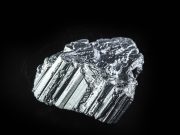
But here’s what makes Spruce Pine extraordinary: Buried beneath this quiet mountain town lies the world’s only economically viable source of ultra-pure quartz — a mineral so critical to modern technology that its supply chain has become a matter of national security.
This is not hype. This is not speculation.
In April 2025, Chinese government officials announced they had discovered high-purity quartz deposits on mainland China. Chinese state media proclaimed it a triumph. The Ministry of Natural Resources celebrated. But industry experts were not impressed.
As minerals consultant Lines, founding director of Stratum, an independent minerals consultancy, explained: “They have been annoyed that they haven’t found something as good as Spruce Pine.”
He added the crucial caveat: Even if China’s discovery is genuine, it would take years for them to build a purification facility. And even then, the quality would likely never match Spruce Pine’s world-leading standards.
That’s the geopolitical reality Washington doesn’t want you to understand.
While the mainstream financial media obsesses over AI stocks and cryptocurrency speculation, a quiet revolution is unfolding in the mountains of North Carolina. The tariff policies of the Trump administration have triggered a fundamental realignment of global supply chains — and Spruce Pine sits at the absolute center.
NEW: FREE Buy Alert: 3 Stocks to Own in 2026
Why Quartz Matters More Than You Think
High-purity quartz doesn’t sound glamorous. It doesn’t have the cache of rare earth elements or lithium. You won’t hear CNBC anchor Jim Cramer screaming about quartz futures at market open.
But here’s the truth: Without high-purity quartz, the modern world simply does not function.
Every microchip in your phone. Every semiconductor powering artificial intelligence. Every solar panel being installed as part of the global energy transition. All of them require ultra-pure quartz to manufacture.
The semiconductor industry alone — valued at $630 billion in 2024 with projected growth to $700 billion in 2025 — depends entirely on high-purity quartz crucibles and tubes. These quartz components must maintain structural integrity at temperatures exceeding 1,700 degrees Celsius while maintaining absolute purity levels. A single impurity can destroy an entire wafer, rendering worthless months of manufacturing work and millions of dollars in costs.
Meanwhile, the solar industry is exploding. China alone installed 329 gigawatts of new solar capacity in 2024, creating voracious demand for quartz crucibles used in silicon crystallization. The International Renewable Energy Agency (IRENA) reported 585 gigawatts of global renewable capacity additions in 2024 — mostly solar.
And this is where it gets truly fascinating for investors watching for opportunities: The global high-purity quartz market is projected to grow from $1.15 billion in 2025 to $2.07 billion by 2034 — representing a compound annual growth rate of 6.71% with solar-grade demand posting the fastest growth at 12.40% annually.
That’s not a mature market. That’s an emerging boom.
The total addressable market for all critical minerals required by the semiconductor and solar industries? Conservative estimates place it at $10 trillion over the next decade.
And Spruce Pine controls the most critical chokepoint in that entire supply chain.
The Geological Miracle That Changed Everything
Editor’s Note: Massive transfer of government-owned land, minerals, and energy is set to hit the market… Here’s how to profit starting with one $10 company… [Full Story]
North Carolina’s Spruce Pine district contains something genuinely unique on Earth: the world’s largest and most accessible reserves of ultra-pure quartz.
No other location on the planet comes close.
The geological story is fascinating. Approximately 450 million years ago, during the Ordovician period, this region was covered by a shallow sea. Over millions of years, quartz-rich sediments accumulated and were subsequently buried and metamorphosed by intense pressure and heat. The result: some of the purest quartz deposits ever discovered.
But geology alone doesn’t explain Spruce Pine’s dominance. What makes Spruce Pine truly irreplaceable is the combination of:
Unparalleled Purity: Spruce Pine quartz achieves 99.995%+ SiO2 purity — the highest-grade specification required for semiconductor manufacturing and advanced optics.
Mineable Reserves: Unlike other high-purity quartz deposits around the world, Spruce Pine’s reserves are not only pure but economically viable to extract and process. Mining companies estimate the current proven reserves will last more than 100 years at current production rates.
Established Infrastructure: Two European mining corporations have spent decades building processing facilities specifically optimized for Spruce Pine’s unique geology. These purification plants cannot simply be replicated elsewhere — they represent billions in specialized capital investment.
When you combine these factors, you understand why even China’s recent announcement of domestic quartz discoveries hasn’t moved the needle. China might eventually develop alternative supplies. But it will take years. The quality will likely be inferior. And by then, the tariff-driven shift in global supply chains will already have solidified Spruce Pine’s control.
Related: [BREAKING] Elon is taking SpaceX public in 2026. $100 Pre-IPO Opportunity-of-a-lifetime Open!
The Tariff Trigger That Changed Everything
Here’s what most financial commentators are missing: The Trump administration’s tariff policies of 2025 have fundamentally altered the calculus for technology manufacturers worldwide.
The Department of Commerce imposed a 160% tariff on Chinese graphite in July 2025. The administration announced a 50% tariff on copper products on July 30, 2025, with additional tariffs to follow. In November 2025, the government expanded its critical minerals list to now include 60 total minerals — copper, silver, uranium, and numerous rare earths.
The clear message: Washington is signaling that it will use tariffs and trade policy to force the reshoring and regionalization of critical supply chains.
For high-purity quartz manufacturers, this creates an extraordinary opportunity.
Semiconductor and solar companies are no longer willing to accept the geopolitical risk of depending on Chinese supply chains. They’re no longer comfortable outsourcing critical material sourcing to potentially hostile nations. And they’re certainly not willing to gamble that Beijing won’t restrict quartz exports the way it has restricted rare earth shipments.
The result? Manufacturers are scrambling to lock in long-term supply agreements with Spruce Pine’s two dominant producers. These companies are suddenly positioned to command premium pricing and secure decades of predictable revenue streams.
Think about what happens when a manufacturer realizes that all alternatives to Spruce Pine quartz either don’t exist yet, will take years to develop, or will be subject to geopolitical risk. That manufacturer has exactly one choice: Accept whatever price Spruce Pine producers demand, or watch your entire semiconductor or solar manufacturing operation grind to a halt.
That’s extraordinary pricing power.
The Investment Opportunity Hidden in Plain Sight
Now, you might be asking: “How do I invest in this?”
That’s the right question. And the answer reveals an investment opportunity that most mainstream financial advisors completely overlooked.
Two companies dominate the Spruce Pine mining district: Sibelco and The Quartz Corp.
Sibelco [finance:Sibelco] is a Belgium-based mining and minerals company that operates the largest and most established high-purity quartz operations in Spruce Pine. The company announced in 2023 that it would invest $200 million to double high-purity quartz production capacity at Spruce Pine by 2025. But that was just the beginning. Sibelco then announced an additional $500 million investment for “Expansion 2,” to be executed between 2024 and 2027, making total planned capital investment approximately $700 million.
Why such massive spending? Because demand is outpacing supply, and manufacturers are willing to pay premium prices for guaranteed access to Spruce Pine quartz.
In its 2024 financial results announced in March 2025, Sibelco reported strong revenue and EBITDA growth despite significant headwinds, including a downturn in the photovoltaic market in mid-2024 and damage from Hurricane Helene in Q4. Between 2019 and 2023, Sibelco’s Spruce Pine operations produced almost 60% more high-quality quartz — a remarkable expansion that demonstrates the company’s operational excellence and the relentless demand dynamics.
Sibelco is now the largest employer in Mitchell County, North Carolina. That’s not an accident. That’s the result of decades of operational expertise and geological advantage.
The Quartz Corp [finance:The Quartz Corp], based in Spruce Pine itself and founded in 2011, represents the second major player. While smaller than Sibelco, The Quartz Corp has established itself as a credible competitor and alternative supplier. The company similarly shuttered operations during Hurricane Helene but has since resumed full production.
The existence of two competing suppliers creates an important dynamic: Neither company can afford to disappoint. Both are racing to expand capacity. Both understand that the tariff-driven reshoring of supply chains has created a once-in-a-generation opportunity.
And here’s what’s crucial: These companies are not commodity producers. They’re not at the mercy of global price swings like traditional mining operations. They’re producers of a specialized material with virtually no substitutes, limited supply sources, and surging strategic demand. That’s a fundamentally different business model.
The Numbers That Tell the Story
Let’s look at the market fundamentals:
Semiconductor Industry: $630 billion in 2024, growing to $700 billion in 2025. High-purity quartz accounts for 42.45% of HPQ usage, with demand continuing to accelerate as chip design complexity increases and wafer sizes expand.
Solar Industry: 585 gigawatts of global renewable capacity added in 2024, with solar leading installations. China alone accounted for 329 gigawatts. The solar industry’s demand for quartz crucibles is growing at 12.40% annually — significantly faster than the overall HPQ market.
Market Growth: The global high-purity quartz market is projected to expand from approximately $1.15 billion in 2025 to $2.07 billion by 2034 — a nearly 100% increase. That represents a compound annual growth rate of 6.71%.
Critical Minerals Shift: The U.S. Interior Department released its final 2025 list of critical minerals in November, establishing a clear government mandate to reduce dependence on foreign adversaries and expand domestic sourcing. This policy framework will remain in place regardless of which political party controls Washington.
Tariff Environment: With 160% tariffs on Chinese graphite, 50% tariffs on copper, and expanding tariff pressure on other critical minerals, the financial calculus for reshoring supply chains has fundamentally changed. Companies are now actively investing in North American sourcing to avoid tariff exposure.
When you add these variables together, what emerges is a secular, multi-year boom in demand for high-purity quartz sourced from the only economically viable, geopolitically secure location on Earth: Spruce Pine, North Carolina.
A Word of Caution (And Why It Doesn’t Matter)
There is one legitimate concern worth addressing: Could rising tariffs and deglobalization ultimately harm Spruce Pine’s producers by making their products uncompetitive globally?
This is a fair question. One consultant, Scott Young of Eurasia Group, raised this exact concern in 2025, noting that rising tariffs could push other countries to develop alternative supplies to reduce their dependence on U.S. suppliers.
That’s a valid long-term concern. But here’s why it doesn’t alter the fundamental investment thesis:
Time horizon: Even if other nations attempt to develop alternative quartz sources, it will take 5-10 years minimum. That’s ample time for Spruce Pine producers to establish long-term supply contracts that lock in customers for decades.
Quality gap: The purity standards required for advanced semiconductors and high-efficiency solar cells are so demanding that alternative sources will struggle to meet specifications. Any gap in quality translates directly into lower yields for manufacturers — an unacceptable outcome.
Sunk costs: Once a semiconductor or solar manufacturer qualifies Spruce Pine quartz for their production process, switching to an alternative source requires months of testing and validation. The switching costs are prohibitively high.
Geopolitical reality: With U.S.-China tensions unlikely to abate, Western manufacturers will demand “trusted” sourcing from allied nations. Spruce Pine, as a U.S. source with proven reserves lasting over 100 years, perfectly fits that requirement.
Editor’s Note: Have you seen this?
Elon Musk just announced a 2026 $1-trillion IPO…
And here’s a way to get in for just $50… [Full Story]
In other words: The tariff-driven supply chain reshoring isn’t just beneficial to Spruce Pine producers in the short term. It’s establishing a structural, multi-decade competitive advantage.
The Companies Poised to Profit
As mentioned earlier, two companies dominate the opportunity:
Sibelco — A Belgium-based minerals producer with world-class Spruce Pine operations, planning $700 million in expansions through 2027. The company reported strong 2024 results despite market headwinds, demonstrating resilience and operational excellence. Sibelco’s scale, track record, and massive capital investments position it as the leading pure-play on the Spruce Pine opportunity.
The Quartz Corp — A Spruce Pine-based competitor offering geographic diversification and entrepreneurial upside. While smaller than Sibelco, The Quartz Corp’s local roots, focused operational model, and commitment to the Spruce Pine market create a compelling alternative for investors seeking exposure to the high-purity quartz boom.
Both companies benefit from the same secular tailwinds: surging semiconductor demand driven by artificial intelligence, accelerating solar installation rates, rising tariffs, and government policies explicitly designed to accelerate the reshoring of critical supply chains.
Conclusion: A Personal Reflection
I’ve spent the last two decades analyzing financial markets and the macro forces that drive opportunity and risk. I’ve seen investors make fortunes by recognizing secular trends before the mainstream financial media catches on.
This Spruce Pine opportunity reminds me of those moments.
Editor’s Note: Your “birthright claim” just got activated…
American citizens now have a legal birthright claim to something previously inaccessible. Under U.S. law, you can stake your claim right now. But there’s only one way to do it… [Full Story]
It’s not flashy. It’s not trendy. There are no TikTok finance creators shouting about quartz futures. No cryptocurrency billionaires tweeting about high-purity minerals. Wall Street’s biggest brokerage houses aren’t publishing research reports on The Quartz Corp.
That’s exactly why it matters.
The most profitable investments are often found in boring, overlooked places where supply and demand create genuine economic moats. Spruce Pine is just such a place.
A tiny mountain town in North Carolina. A mineral that most people have never heard of. Two companies quietly ramping up production to meet surging strategic demand.
Meanwhile, the tariff policies driving the reshoring of critical supply chains are now embedded in U.S. government policy — regardless of which political party holds power.
That’s the setup for a quiet, but profoundly significant boom.
The time to understand this opportunity is now — before the mainstream financial media catches up, before Wall Street begins publishing research reports, and before valuations adjust to reflect the genuine strategic importance of America’s only reliable source of ultra-pure quartz.
Editor’s Note: I just uncovered the craziest – and most astonishing — thing I’ve ever seen. It’s a new Tesla patent that could rock the world. In this new patent, Elon describes a new “keyhole surgery-like process” for powering technology. Take a look…
Wall Street Watchdogs is committed to uncovering the truth about financial markets and helping individual investors prepare for systemic risks that mainstream media won’t discuss. We receive no compensation from the companies or assets we analyze. This article is for educational purposes only and should not be construed as investment advice.