




Here’s something you probably haven’t been paying attention to: India’s stock market has been quietly setting up one of the more interesting technical patterns we’ve seen this year.
Coming out of the 2020 market chaos, India was one of the few places that actually kept up with the U.S. stock market through the end of 2024. That’s pretty remarkable—most international markets couldn’t match the relentless climb of U.S. equities. But India did.
Then 2025 happened. The iShares MSCI India ETF (INDA) is up just 3.44% year-to-date. Compare that to the S&P 500’s performance and you’re looking at serious underperformance. It’s been an off-cycle year.
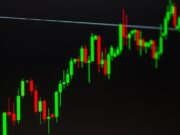
But here’s where it gets interesting. INDA has spent the past year forming what technical analysts call a triangle pattern—the highs and lows converging, creating tighter price swings. Picture two trendlines squeezing together like a vise. When triangles break out decisively, they often see strong follow-through in that direction. It’s like a compressed spring finally releasing.
Right now, INDA is trading above the upper boundary of that triangle near $54.50. This is the setup. Technical confirmation requires two consecutive weekly closes above that level to avoid false breakouts. If we get that confirmation, it would trigger a weekly MACD “buy” signal—indicating momentum is shifting from sellers to buyers at a meaningful timeframe.
The upside target? Around $59.50, roughly 9% from the breakout level. That might not sound earth-shattering, but consider this would happen while India potentially outperforms the U.S. market, reversing this year’s disappointing trend.
Multiple Signals Aligning
Last week, the TD Combo model—a technical indicator developed by Tom DeMark—flashed an intermediate-term counter-trend buy signal when comparing INDA to the S&P 500. Translation: India stocks might be about to outperform U.S. stocks. The last time this signal triggered was late February, and it preceded about two months of India outperforming the broader market. If patterns repeat, we could be looking at roughly eight weeks of relative strength.
The short-term picture supports this too. INDA already cleared cloud resistance on the daily chart—essentially a support/resistance zone calculated from multiple moving averages. The near-term target here is around $55.90, which was the June peak.
Now let’s talk risk management, because no setup is perfect. The 200-day moving average sits below current prices and acts as a line in the sand. If INDA falls back below that level, the triangle breakout thesis gets jeopardized. That’s your warning sign.
For anyone considering exposure to Indian equities, this confluence of signals—triangle breakout, MACD buy, relative strength signal versus the S&P 500, and short-term momentum—creates a compelling technical case. Multiple timeframes and methodologies all pointing in the same direction. That doesn’t happen every day.
Could this fall apart? Absolutely. Triangle breakouts fail sometimes. Markets don’t care about our patterns. India faces economic and political challenges that could overwhelm any technical setup. But technical analysis gives you defined risk parameters—in this case, that 200-day moving average. If price goes below it, the trade isn’t working and you move on.
The technical setup is there. The signals are aligning. If the breakout confirms with two consecutive weekly closes above $54.50, and if the relative strength plays out like the model suggests, India could finish 2025 much stronger than it started. After a year of lagging, that would be welcome for anyone who’s been patient with Indian equities.
How to Access Indian Equities
For U.S. investors looking to gain exposure to India’s market, ETFs provide the most straightforward access. The iShares MSCI India ETF (INDA) is the obvious vehicle since the technical analysis discussed above centers on its chart. INDA is the largest India-focused ETF with over $10 billion in assets and tracks large and mid-cap Indian stocks, covering roughly 85% of the market’s capitalization. The expense ratio of 0.65% is reasonable for emerging market exposure.
For investors wanting different approaches, the iShares India 50 ETF (INDY) concentrates on India’s 50 largest companies through the Nifty 50 Index, offering more focused exposure to blue-chip Indian names. Those seeking small-cap exposure can consider the iShares MSCI India Small-Cap ETF (SMIN), which targets the bottom 14% of companies by market cap and provides leverage to India’s growth story through smaller, potentially faster-growing businesses.
The primary risks with India ETFs beyond the technical considerations include currency fluctuations (rupee weakness versus the dollar), country-specific regulatory changes, and the inherent volatility of emerging markets. But for investors convinced by the technical setup and willing to manage these risks, ETFs provide liquid, diversified access to what the charts suggest could be a strong finish to 2025 for Indian equities.